My Snowdrop Guide
How to Choose a Teddy Bear as a Gift
A practical guide to choosing a teddy bear by touch, construction, age, size and occasion, based on our experience at My Snowdrop.
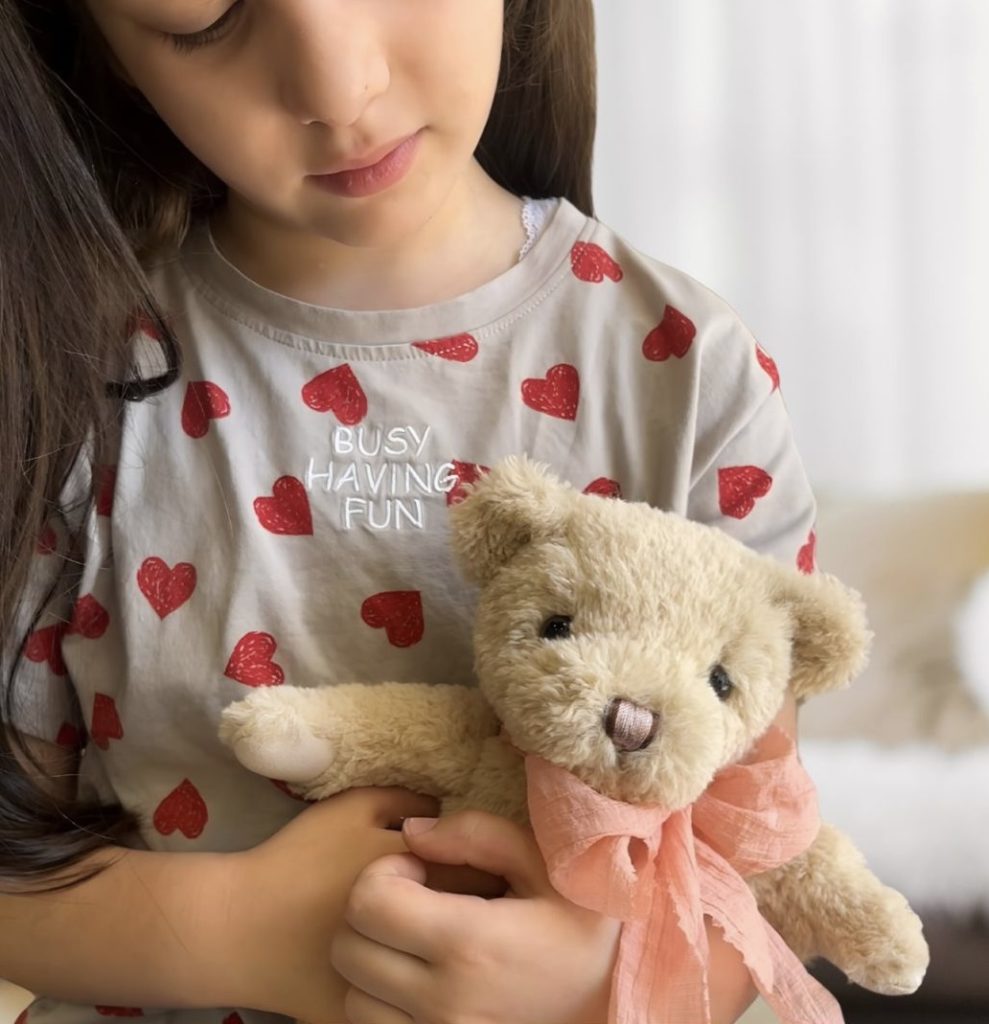
But from what we see at My Snowdrop, the teddy bear is no longer the automatic choice it once was. Today it competes with foxes, bunnies, pandas, sea creatures, farm animals and fictional characters. Children can form a strong attachment to almost any plush toy when its shape, expression and personality speak to them.
We can see this with our own children. Our son’s favourite plush toy as a toddler was a Jellycat fox. It had its own name: “Lisko Lis” in Bulgarian, or “Foxie-Fox” in English. Our daughter’s favourite is a Jellycat bunny, while our third baby is growing up with a panda that was given to him as a gift.
The teddy bear has not disappeared. It is simply no longer alone.
Is a teddy bear still a reliable gift choice?
Yes. When you are not sure what to buy for a child, a teddy bear remains a dependable gift direction.
It does not depend on the child already knowing a particular film, character or trend. A teddy bear can be played with, carried around, used as a comfort object or kept by the family for many years.
That does not mean every teddy bear is suitable for every child. The recipient’s age, the bear’s size and construction, and the information on its label still matter. The teddy bear is a reliable direction, but the individual bear must still be chosen carefully.
How to choose a teddy bear as a gift
There are practical details you can check, but the first part is intuitive.
Begin by touching it.
Does it feel like something you could hold for a long time without wanting to let go? Does the material create a soft and pleasant feeling, or does it quickly begin to feel hot or uncomfortable?
Imagine the same material being used to make a large piece of clothing. Would you want to wear it? This is not a laboratory test or a guarantee of quality. It is a simple way to judge whether the texture feels pleasant enough for a toy that may be hugged and carried every day.
Does it feel strong enough for normal play?
Imagine two children beginning a tug-of-war over the bear. Does its construction feel as though it would hold up?
You do not need to pull or damage a toy in a shop to examine it. You can normally feel whether the filling is consistent and whether the arms, legs and ears appear firmly attached.
A child will not handle a teddy bear like a display object. It may be carried by one arm, dropped, pulled, sat on and taken everywhere. A well-made bear should feel prepared for that kind of life.
Look closely at the details
Have a proper look at the bear. Can you distinguish different materials around the paws, nose, mouth or eyes? Does its expression feel considered? Do the proportions look intentional?
More details do not automatically mean better quality. A very simple bear can still be beautifully made. What matters is whether the design and construction feel thoughtful rather than rushed.
A memorable teddy bear should feel like a character, not only like a shape with a face added to it.
Is the instant connection there?
Last but not least, consider the instant connection factor.
Does the teddy bear have a character? Does its expression make it look calm, curious, serious, funny or perhaps slightly strange?
People rarely become attached to a plush toy because of its technical specifications. The attachment usually comes from the whole character: its shape, softness, face and the feeling it creates when held.
Sometimes you look at one teddy bear and immediately feel that it is the right one. That feeling matters.
Meet the three Marshyellow Coco Bears
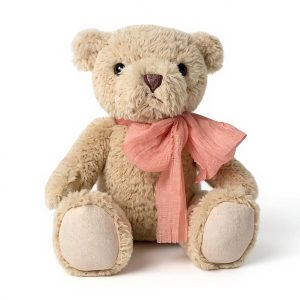
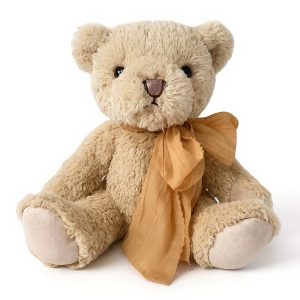
Coco Bear is My Snowdrop’s own Marshyellow teddy bear: a softly made, 19 cm sitting companion with embroidered details, gentle paw pads and a splash of personality from its scarf colour. The three versions below let you choose the mood that feels right for the recipient.
-
-
Sale!
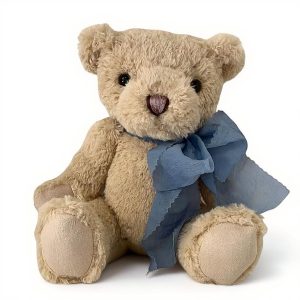
Marshyellow Coco Bear, Blue Scarf
Original price was: €27.00.€19.90Current price is: €19.90. -
Check the label and ask the retailer
After the intuitive part, check the practical information. Look for:
- The recommended age
- Warnings and restrictions
- The CE marking
- Materials and filling
- Washing and care instructions
- Manufacturer or responsible-business information
Only toys bearing CE marking can be placed on the European Union market. The marking indicates conformity with applicable EU safety requirements. It is not a separate premium-quality award, so it should not replace your own inspection of the toy.
If you want to be extra sure, ask the retailer about the product information, stitching, attached details, care instructions and recommended age. A responsible retailer should be able to inspect the item and check the manufacturer’s information rather than giving only a general answer.
Read the European Commission’s information about placing toys on the EU market.
Is a teddy bear suitable for a newborn?
Some teddy bears are labelled as suitable from birth, while others are not. Always check the information for the specific toy.
Even when a teddy bear is labelled as suitable for a baby, we remain cautious about leaving a baby unattended with any toy. Babies do not coordinate their movements well, and a soft toy can still end up over a baby’s face or mouth.
A toy can comply with the relevant product requirements and still become unsafe in a particular situation. Babies should therefore be supervised while interacting with teddy bears and other plush toys. Soft toys should not be left with a sleeping baby or placed in the cot as part of the sleep environment.
Read the NHS safer-sleep guidance for babies.
What teddy bear should you choose for a first birthday?
A teddy bear can be a strong first-birthday gift. At that age, it can become a toy the child carries and plays with, but it may also remain something the family keeps for years.
Choose a bear that is clearly labelled as suitable for the child’s age and is not too heavy or difficult to hold. Check whether it can be cleaned easily—a bear given to a one-year-old is unlikely to remain perfectly clean.
Consider the family’s space as well. A very large bear may look impressive, but it may not be practical in a smaller home. The character matters too: a first-birthday bear should feel distinctive enough to be remembered.
Should you choose a large or small teddy bear?
A large teddy bear creates a strong first impression. It can look generous and dramatic when given, but it also needs space and may be difficult for a small child to carry.
A smaller bear is easier to carry, store and take outside the home. It may become part of the child’s everyday life more easily.
A medium-sized teddy bear is often the most practical middle option. It can still feel like a substantial gift without becoming difficult to manage.
Always check the listed dimensions. Product photographs can make a bear appear much larger or smaller than it really is.
Is there a teddy bear for a girl or a boy?
We do not think there needs to be a strict difference. More useful questions are:
- How old is the child?
- What colours or characters do they like?
- Will the bear be played with or mainly kept?
- What size is practical?
- Does its character feel right?
If you do not know the child’s preferences, choose a bear with a warm and expressive character rather than relying only on conventional colours for girls or boys.
How much should a good teddy bear cost?
There is no single price that defines a good teddy bear. The cost may depend on:
- The brand
- The size
- The materials and construction
- The amount of detail
- The production standards
- The packaging
- Whether the bear is collectible
A larger or more expensive bear is not automatically better. Touch it, inspect it closely, check the label and consider whether the construction, materials and character feel proportionate to the price.
A good teddy bear should feel considered, not simply expensive.
How should a teddy bear be cleaned?
Always begin with the care label on the individual product.
Some teddy bears can be washed in a machine. Others should be hand-washed or cleaned only on the surface. The fabric, filling, embroidered features and internal structure can all affect the correct method.
Do not assume that every plush toy can be washed in the same way. A method suitable for one bear may change the shape, texture or filling of another. If the instructions are unclear, ask the retailer before washing it.
Are plush toys becoming more trend-driven?
Plush-toy buying may now be becoming more trend-driven and less tradition-driven.
Jellycat, Labubu and the influence of social media show how quickly a particular toy or character can become desirable. People do not always begin by deciding that they want a teddy bear. They may begin with one exact character they have seen online.
Classic brands such as Steiff remain a strong choice. In our experience, parents and grandparents are more likely to ask for established teddy-bear brands, while children and teenagers are more likely to follow a particular character, trend or collection.
The classic bear may lose its position as the automatic first choice, but it will remain a familiar gift. It will simply compete with far more animals and characters than it did before.
We also see teddy bears being chosen for romantic gifts, particularly around Valentine’s Day. This is an observation from our own retail experience rather than a claim about the entire market, but it shows how the teddy bear’s role now extends beyond children’s gifts.
A final checklist before buying a teddy bear
- Is it suitable for the recipient’s age?
- Does the material feel pleasant to hold?
- Does the bear feel strong enough for normal play?
- Do the stitching and attached details appear secure?
- Does it include clear care instructions?
- What are its actual dimensions?
- Does the family have enough space for it?
- Does it feel like a character rather than a generic object?
- Do you feel an immediate connection to it?
Frequently asked questions
Is a teddy bear a good gift for a baby?
It can be, provided the individual toy is clearly labelled as suitable for the baby’s age. Babies should still be supervised while interacting with toys, and soft toys should not be left in their sleeping space.
What size teddy bear is best for a gift?
A medium-sized bear is often the most practical option. It feels substantial but is normally easier to carry, clean and store than a very large bear.
How can I recognise a high-quality teddy bear?
Start by touching it and examining its construction. Look for pleasant material, consistent filling, firm stitching, secure details, clear product information and a character that feels thoughtfully designed.
Does CE marking mean a teddy bear is high quality?
CE marking concerns conformity with applicable EU requirements. It is important, but it is not a premium-quality rating. Materials, construction, care instructions and attention to detail should also be considered.
Should I buy a large teddy bear as a first-birthday gift?
Only when the family has enough space and the size is practical. A large bear creates a strong impression, but a smaller or medium-sized bear may be easier for the child to hold and enjoy.
Should a teddy bear be chosen differently for a girl or a boy?
Not necessarily. Age, preferences, character, size and intended use are more useful criteria than traditional gender categories.
The teddy bear is still relevant, but it is no longer alone
The teddy bear remains a classic gift. It is familiar, warm and emotionally easy to understand.
But it now exists in a much wider world of foxes, bunnies, pandas, sea animals, farm animals and characters made visible through social media. Children may form an attachment to any of them. Parents and grandparents may continue choosing the traditional bear, while younger buyers may be attracted to the character that is popular at that particular moment.
The teddy bear may no longer be the automatic first choice, but it remains one of the most reliable gift directions when you want something recognisable, comforting and capable of carrying emotional meaning.
The best teddy bear is not necessarily the largest, most traditional or most expensive one. It is the one that feels good to hold, looks as though it was made with attention, suits the recipient’s age and creates an immediate connection.